












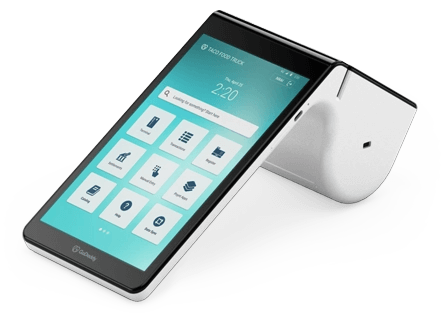


‡$450 Credit Promotion: Promotion available for new Clover Business Solutions merchants who have not previously had a Clover account or processed with First Data Merchant Solutions LLC. Clover accounts are subject to approval, including credit approval. Selecting a Clover point-of-sale credit card processing device does not convey or guarantee approval. Offer is valid only for purchases that include at least one of the following devices: Flex, Flex Pocket, Mini, Station Solo, or Station Duo. Clover devices are only shipped after the application is approved. To be eligible, merchant must: (1) apply for the account through the online Clover website shopping experience, (2) purchase a Clover Hardware or Software Subscription, (3) be credit approved no later than 12/31/26, (4) activate account by submitting a batch of $25 or more in sales within 30 calendar days from approval date, (5) process $10,000 or greater in card transactions within the first four billing cycles. Additional fees may apply to certain Clover apps, services or activated accounts. Promotional offer excludes Payeezy. Eligibility is determined at our sole discretion. Limit of one reward per business relationship, regardless of the number of business locations. Offer is not valid with any other offer and is subject to change without notice. Requires a 3-year contract. All other terms and conditions apply. All pricing and promotions presented on POS System & Credit Card Readers | Clover are for new merchant acquiring customers only. Merchants currently processing on First Data systems and merchants that have processed on First Data systems during the previous 90 days are not eligible for offers and pricing on POS System & Credit Card Readers | Clover. When applying for the Clover Account experience without hardware, the monthly software fee is waived for 90 days. After the 90-day trial period, the cost for Virtual Terminal is $14.95 per month when no other software plan is in effect. Trial period and monthly cost is subject to change. Terms and conditions apply. First Data Merchant Services, LLC, doing business as Clover Business Solutions, is a registered ISO of Pathward N.A., Sioux Falls, SD; and Wells Fargo Bank N.A., Concord, CA. The Clover name and logo are registered trademarks owned by Clover Network, LLC. All trademarks, service marks, and trade names referenced in this material are the property of their respective owners.
The content, including without limitation any viewpoint or opinion in any
profile, article or video, contained on this website is for informational
purposes only. Any third party contributor to any such profile, article or
video has been compensated by CreditCardProcessing.net for such
contribution. It is advised that you conduct your own investigation as to
the accuracy of any information contained herein as such information,
including without limitation any quote, is provided "as is" for
informational purposes only. Further, CreditCardProcessing.net shall not
be liable for any informational error or for any action taken in reliance
on information contained herein.
*Our Recommended List
Select business type
1. Merchant One

^Limit of one (1) free terminal per new merchant account. Merchant must open a new merchant account with Merchant One. Monthly minimum required. Ask your sales representative for further details.
^Limit of one (1) free terminal per new merchant account. Merchant must open a new merchant account with Merchant One. Monthly minimum required. Ask your sales representative for further details.
Learn More

2. Clover

‡New customers only. Must: (1) apply for the account through our the online Clover
website shopping experience, (2) purchase a Clover Hardware or Software Subscription,
(3) be credit approved no later than 12/31/26, (4) activate account by submitting a batch of
$25 or more in sales within 30 calendar days from approval date, (5) Process $10,000
or greater in card transactions within the first four billing cycles. Eligible devices only. Add'l.
fees may apply. 3-year contract req’d. Ends 12/31/2026. Full terms below.
Learn More
3. Global Payments
Learn More
4. Worldpay

Learn More
5. Leaders

*Terms and conditions apply. Please ask your sales associate for complete details. Subject to availability, while supplies last.
Learn More

Popular Pick:
†$500 Gift Card
from Merchant One if they cannot beat
your current rate

†Merchant must submit a completed merchant application with competing offer and or a complete processing statement from within 30 days to qualify. Merchant processing statement must detail out interchange and passthrough fees or additional reporting might be asked for. Offer can be withdrawn at any time. Please ask your sales rep for more details.
†Merchant must submit a completed merchant application with competing offer and or a complete processing statement from within 30 days to qualify. Merchant processing statement must detail out interchange and passthrough fees or additional reporting might be asked for. Offer can be withdrawn at any time. Please ask your sales rep for more details.
Not on Our Recommended List
Square
Retail Rates
3.5% + $0.15
Compare
Stripe
Retail Rates
2.9% + $0.30
Compare
Chase
Retail Rates
1.99% + $0.15
(reported)
Compare
PayPal
Retail Rates
1.55% - 2.7%
Compare
Bank of America
Retail Rates
Interchange $0.20 + 2.7%
Compare